Wednesday, March 30, 2011


I search the web for photos that won't give anything away. These two fleece balls seemed like a nice representation of the natural colors of some of the sheep contributing wool this (ad)venture. See how similar the colors in this photo are to the new background image?

I've seen some things I'd just as soon not in my search. The lamb being born was a little more than I really needed a visual for. Then I found this one of Peter John, the dog and sheep--on Mountain Meadow Wool's website. Go here for a slideshow.

Then check back here because I think Valerie has a joke to share that will go with that picture.

And go here to see how a cowgirl in Wyoming dresses in winter. As a committed city person I find this all fascinating. I love that these people are as committed to their locale as I am to mine.

A wonderful commitment to doing this in the U.S. gives us access to fibers that support a local industry.
Jill

Picking a fiber blend


So, what do you get when you cross a sheep with an alpaca?


A sweater with a long neck!


So there is your hint for the fiber content in our new yarn. Okay, so its not that hard to figure it out, but what is interesting in this yarn are the natural colors and the way that the blending and plying produce an unusual effect of depth, light, and softness. Its just killing me that I can't show you a picture of it......but we must string you along for a bit more. Only a few more months until the reveal!


In the meantime, we can discuss the make-up of the blend. I don't think I'm breaking any rules by saying that it is a 3 ply yarn. Two of the plies are a 50/50 blend of our fabulous gooshy smooshy mountain merino with silky softy alpaca in a natural rose hue. The third ply is natural medium grey merino. When these three are plyed together, the grey appears to bring forth a subtle blue-grey tone. Weirdly stunning!


Monday, March 28, 2011

Background

In this case background has a couple of meanings.

The first is that this is the image that I use as a background for A Yarn is Born design concept stuff. This is all still only internal, so this is just the beginning.

Susan and I have a lot of mental images related to our concept of the Wild West, based almost entirely on Bonanza and similar cowboy stuff from our childhood. I don't recall either of us being interested in cowboys, but it was kind of pervasive stuff. I think mostly of saloon girls, shopkeepers' wives, the schoolmarm, the doctor's wife, the rich girls, the poor girls and of course, the working girls. What little history I can recall for that time period is based on Little House on the Prairie, not Cowboy Literature or History.

The other aspect of background is that we're starting to fill in the background on A Yarn is Born. I think I see it at the end of the tracks--or is that a cowboy?

Friday, March 25, 2011

Sheepy


Even if you are a fiber person (not a livestock person) you may only encounter fiber in a pristine state. Karen and Valerie and the workers at the Mill are familiar with the "sheepier" aspects of fiber. When you knit with yarn from Mountain Meadow wool you might encounter some "plant material." I always just pluck it out, but as one attendee in Buffalo said, it is a piece of Wyoming.

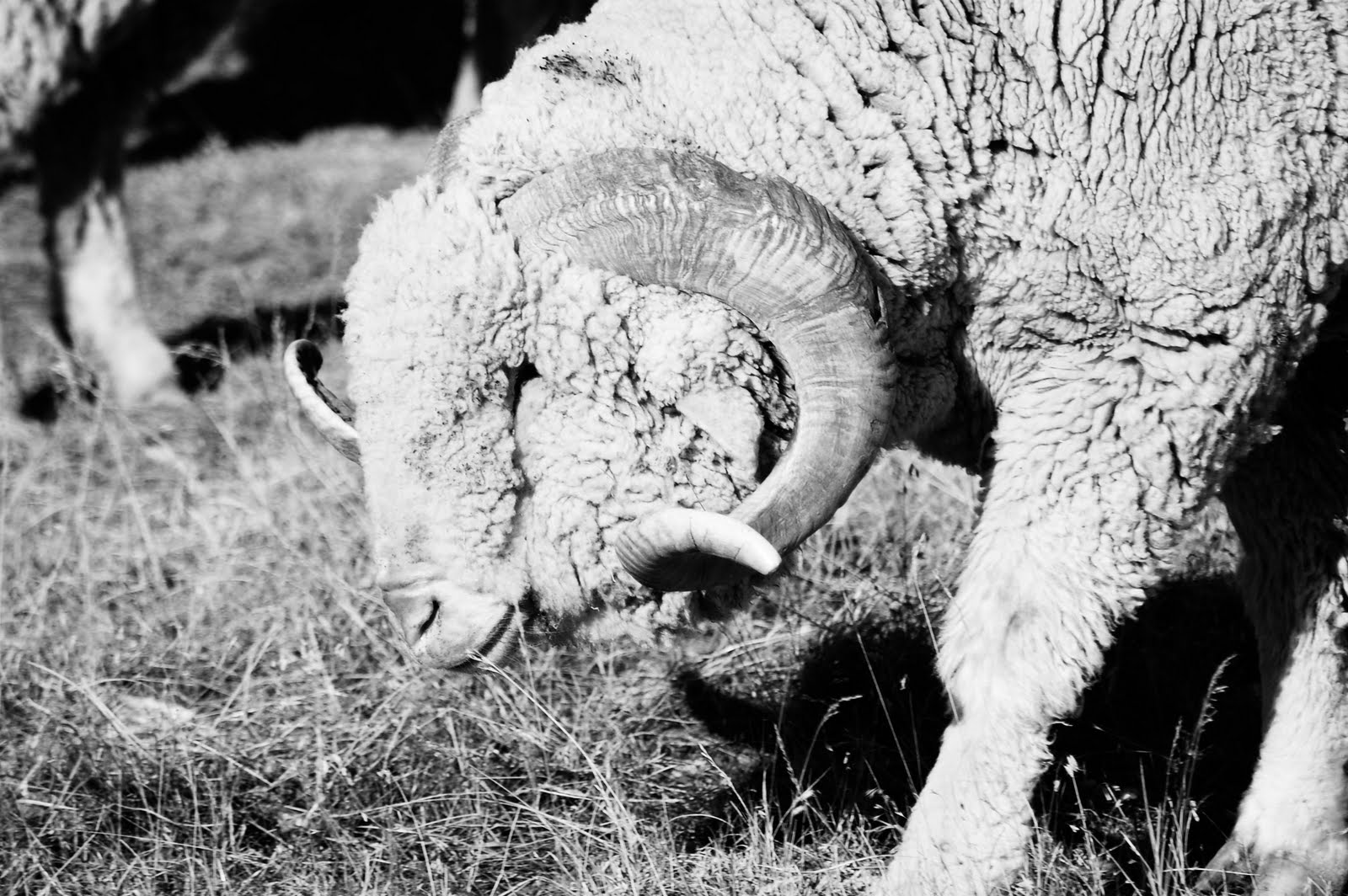
While the handsome gentleman in the post on Rambouillet makes you want to grab that sheep, it is amazing that what he's wearing could ever become the Mountain merino that you can use for baby things. The fleece is dirt color when it is unbaled--and sheepy. Eeeooo
wwwwwwwww.
This makes the washing process at the Mill critical. When we visited in September you would not believe how fascinated we all were by the fleece going into the bath and coming out a different color. And no chemicals are used. Hot water and some earth-friendly cleaner and a little soak.

Tuesday, March 22, 2011

Rambouillet


Hi everyone,

Today is a day of technological errors. QuickBooks, the PHONE, grrr. Now is a great day to bury myself in the soft, lovely wool.


Shearing is around the corner. We have some wonderful growers and they grow primarily Rambouillet. This is a breed of sheep that has a funny back story. I am going to paraphrase, but here is the basic tale.


Years ago, we are talking middle ages, France had all of the textile mills and Spain had all of this lovely breed of Merino sheep. So France, in order to have top notch wool fabric they HAD to ask Spain. And Spain, realizing that they had a great thing going made it Illegal to export the Merino breed of sheep. Even punishable by death! Yes!


So the King of France decided on a plan. He was going to start an exotic animal zoo. Off went a letter requesting breeding animals of many of the exotic animals of Spain. And buried in the list was a request for....Merino sheep. Shhh.


So the King of Spain signed off and a whole menagerie of animals arrived in France, including a group of about 40 Merino, which quickly were re-named: Rambouillet after the name of the castle at which the zoo was housed. Today's Rambouillet decended from French royalty and now wander the prairie. Oh how the mighty have fallen. Wooly remittance men. Don't those horns remind you of crowns?


Cheers!

Tuesday, February 15, 2011

Sertified Sorted


Don't you just love the way alpaca feels? Soft, Soft, Soft! But trying to spin it? Well that is tough love!

If you were to look at wool under a microscope, you would see that the surface is covered with scales that look like the shingles on an old wood roof. Some of them stand up a little more than others. On more coarse wool, those shingles (okay - scales) really stand up. These little do-dads make for long lasting carpet but they poke the more tender skin of the rest of us Princesses.
Alpaca has a very subdued scaling. So it is less likely to itch....unless you get unlucky enough to have alpaca with a very high micorn, such as a 30 micron. But then it is called Llama. And so as not to annoy my Llama grower friends, sometimes a very fine fleeced Llama can qualify as alpaca fleece! Go figure.

Alpaca as you probably know is a relative of the Llama. But it was bred specifically for its fine fiber. They are NOT pack animals like the Llama. And yes they sometimes intermarry with Llamas and produce something....... well lets not talk about that in polite company.

We are fortunate enough to have made the aquaintance of Robyn Kuhl and the co-op members at NAAFP (North American Alpaca Fiber Producers). Their members, coming from all over the country are highly skilled at sorting their clips (or blanket as they call it) by micron and color. This is no small task because there are officially 16 different colors in the US. Peru claims to have 52. But thats because my mom tells me that television has ruined my eyes to the nuance of color. (can you see the eye-roll going on here?)

NAAFP brings us the best fiber! It is so clean of "botanicals"( formerly known as vegetable matter.) and you can tell these animals were lovingly cared for. We did a joint project with them last year, the product of which was our Lilura yarn, a 50%mountain merino and 50% Alpaca. They went on to make their portion into Hats and scarves which are yummy!

Linda: I just bought a herd of alpacas from Pakistan.
Karen: "Islamabad?"
Linda: No I just prefer alpacas.
Cheers!!!
Valerie


Yarn colors

Susan says:

Jill and I were together this weekend and we had some of the yarn with us. She kept commenting that the hanks looked different in various lights. Sometimes we see peach colors, other times almost a mauve. We were in Las Vegas and the colors in the surrounding mountains reminded us of the yarn colors, as did the rocks in the some of the landscaping. Colors that evoke calm for me.